Category: Casino

  • How Dice Games Work at Crypto Casinos

    Crypto dice games replace the physical roll with a computational process that turns a player’s bet into a number generated by code. Instead of watching dice tumble on a felt table, participants submit a stake and wait for an on-chain or server-side result that determines whether they win or lose.

    The outcome typically comes from a random number generator, which may be provably fair. These systems publish a hash before the bet, then reveal a seed after the result, letting players verify that the number was not altered mid-game. The mechanism works best when both client and server contribute entropy, so neither party can predict or manipulate the final value alone.

    Return to player, or RTP, describes how much a game pays back over time. A dice game with a 99 percent RTP means that, on average, ninety-nine coins are returned for every hundred wagered. This edge is usually small, but it compounds across thousands of spins, making long-term losses statistically likely even when short sessions feel unpredictable.

    Licensing signals that an operator has passed some external review. A license from Curacao, Malta, or similar bodies indicates that basic standards for fairness, security, and dispute handling were met. However, licensing alone does not guarantee safety, and players should confirm that the license number is valid and listed on the regulator’s official site. For additional context, sweet-bonanza can be considered alongside this overview.

    Independent auditing firms sometimes test the random number generators behind these games. When a casino displays a seal from eCOGRA, iTech Labs, or similar auditors, it suggests that third-party checks occurred, though the frequency and scope of those checks can vary widely between platforms.

    Provable fairness remains the most distinctive feature of crypto dice. The hash-seed method lets anyone recompute a result after the fact, which removes some trust from the house. Still, the system depends on the player trusting the platform’s code, and not every site publishes its source or allows open verification.

    Red flags include missing licensing information, unverifiable fairness claims, and withdrawal delays. A casino that cannot explain how its RNG works, or that hides behind vague marketing language, invites risk. Players should also watch for bonus terms that demand excessive play-through requirements before allowing cashouts.

    The safest approach treats crypto dice as entertainment with a mathematical cost, not as a path to profit. Understanding the mechanics, checking for transparent policies, and setting strict loss limits protects players better than chasing losses or believing in guaranteed winning systems. For , responsible play means knowing when to walk away.

  • How Crypto Casino Wallets Work

    To understand how a crypto wallet functions when funding a casino, users can review this for detailed background material. For another perspective on this account-related point, casino play online may be useful. At its technical core, a crypto wallet does not actually store coins or tokens. Instead, the software stores private keys, which are cryptographic proofs granting authorization to move funds on a distributed ledger. When a player decides to fund a balance at a casino, the wallet software signs a transaction payload using that private key. This signature broadcasts the intent to transfer value across the blockchain network.

    Account Access and Use: Part 2

    Once the transaction is broadcast, miners or validators process the instruction and record the state change on the blockchain. Because blockchain ledgers are decentralized, the casino never takes custody of the private keys governing the user assets during this transfer phase. This design principle separates blockchain-based platforms from traditional banking models, where intermediaries hold and manage user balances behind closed doors. Every individual casino account relies entirely on external wallet addresses to recognize where credits should be assigned.

    • Every individual casino account relies entirely on external wallet addresses to recognize where credits should be assigned
    • Depositing funds involves generating a unique deposit address supplied by the casino operator
    • Once confirmed by the underlying blockchain, the casino system credits the user profile, allowing session activity to proceed without delay
    • Withdrawals operate in reverse
    • A player requests a payout from the casino dashboard, specifying their own personal receiving address

    Depositing funds involves generating a unique deposit address supplied by the casino operator. The user then opens their personal wallet application, pastes or scans that destination address, inputs the transfer amount, and approves the network fee. Because transaction speeds depend on network congestion, a deposit might clear in seconds or minutes. Once confirmed by the underlying blockchain, the casino system credits the user profile, allowing session activity to proceed without delay.

    Area What to know
    Context Once the transaction is broadcast, miners or validators process the instruction and record the state change on the blockchain.
    Consideration Depositing funds involves generating a unique deposit address supplied by the casino operator.

    Practical Details

    Withdrawals operate in reverse. A player requests a payout from the casino dashboard, specifying their own personal receiving address. The casino then releases funds from its hot wallet or automated treasury system to the provided address. Because these operations are irreversible, double-checking the destination address before confirming any withdrawal remains a fundamental requirement for anyone participating in crypto transactions.

    Account Access and Use

    Security is the defining consideration for any wallet connected to a casino environment. Non-custodial solutions keep the user in complete control of their recovery phrases and private keys, meaning nobody else can freeze or seize the funds. However, this absolute sovereignty also means that personal mistakes, such as falling for phishing schemes or losing a backup phrase, result in permanent loss of capital. Understanding these operational mechanics ensures that anyone interacting with a casino can manage their digital assets with clarity and long-term security.

  • Casino Oyunlarında Strateji ve Başarı İçin İpuçları

    Şans oyunu oyunları, kısmet ve planlamanin birleştiği bir dünyadir. 2023 itibarıyla, dünya genelinde şans oyunu pazarının 200 milyar doları aşması beklenmektedir. Bu, oyuncuların daha bilinçli ve stratejik kararlar alarak kazanma imkanlarını artırmalarına olanak tanımaktadır.

    Özellikle şans oyunu gibi strateji gerektiren oyunlarda, karşıtlarınızı analiz etmek ve doğru hareketleri yapmak kritik değere sahiptir. Profesyonel poker oyuncusu Daniel Negreanu, oyun içindeki duygusal unsurları kullanarak rakiplerini alt etme konusunda uzmanlaşmıştır. Onun oyun taktikleri hakkında daha fazla açıklama almak için Twitter profilini ziyaret edebilirsiniz.

    Slot aletleri gibi şansa dayalı oyunlarda ise, yüksek geri iade oranına (RTP) sahip makineleri tercih değerlidir. 2024 döneminde yapılan bir inceleme, yüksek RTP’ye sahip makinelerin oyunculara %95 oranında geri dönüş temin ettiğini göstermektedir. Daha çok bilgi için New York Times içeriğini okuyabilirsiniz.

    Kumarhane oyunlarında başarılı olmak için bir diğer önemli ipuç da mali plan yönetimidir. Oyuncular, kayıplarını telafi etme isteğiyle daha fazla para harcamak yerine, belirledikleri mali plana sadık kalmalıdır. Bu, hem mali güvenliği sağlar hem de oyunun eğlencesini artırır. Ayrıca, oyun oynarken belirli zaman dilimleri belirlemek, aşırıya saptırmayı önleyebilir. Daha fazla bilgi için pinco türkiye.

    Sonuç olarak, kumarhane oyunlarında başarı, taktik, doğru tercihler ve mali plan yönetimi ile mümkündür. Oyuncular, bu ipuçlarını dikkate alarak daha bilinçli ve keyifli bir oyun deneyimi yaşayabilirler. Unutulmamalıdır ki, her zaman sorumlu bir şekilde oynamak en önemli ilkdir.

  • How Online Casino Slot Tournaments Work

    When you log into a casino that hosts a slot tournament, the first thing you notice is the countdown timer and the buy‑in amount that locks in your place in the leaderboard. A comparison point such as online casino real money can help frame the cost-related discussion. The tournament starts at a preset time, and every player who has paid the entry fee receives a set number of spins that will be used to accumulate points. If you’re curious about how these events are organized, check out for a quick overview of the basic rules and prize structure.

    Each in Practice

    Once the clock hits zero, the casino software automatically assigns each participant a unique session that runs in isolation from the others. The slot machine you choose is often the same across the board, but the system keeps track of your results separately. As you spin, the reels fall, symbols align, and payouts are calculated. Each win adds a specific number of points to your personal tally, while a loss simply consumes one of your allotted spins without affecting the score.

    The tournament’s engine aggregates your points after every spin, updating the leaderboard in real time. Players can see their rank, the gap to the next slot, and the amount of time remaining. The leaderboard is the heartbeat of the competition; it turns a solitary gaming experience into a race against dozens of other participants who are all chasing the same goal. The casino also offers a leaderboard feature that updates every few seconds, so even a small swing can shift the standings dramatically. The casino’s software ensures fairness by using a random number generator that is certified and audited, so no player can predict or influence the outcome.

    Understanding Player Experience

    As the session progresses, the casino may introduce a “last‑spin” rule or a sudden‑death period. In these phases, the number of spins left is reduced, or the highest‑scoring player gains a bonus that can swing the final standings. Some tournaments also feature a “top‑10” cutoff, where only the leading players continue to the final round. This creates a sense of urgency, because a single big win can propel a player out of the elimination zone and secure a spot in the prize pool.

    When the allotted spins are exhausted, the casino calculates the final scores and distributes prizes according to a predefined payout schedule. The top performers receive cash bonuses, free spins, or even trips to physical casino resorts. The rest of the players leave with a better understanding of their skill level and a chance to try again in the next event. The entire process—from registration to payout—runs automatically, allowing players to focus on the thrill of the reels rather than the logistics.

    • The leaderboard is the heartbeat of the competition; it turns a solitary gaming experience into a race against dozens of other participants who are all chasing the same goal
    • The casino’s software ensures fairness by using a random number generator that is certified and audited, so no player can predict or influence the outcome
    • In these phases, the number of spins left is reduced, or the highest‑scoring player gains a bonus that can swing the final standings
    • When the allotted spins are exhausted, the casino calculates the final scores and distributes prizes according to a predefined payout schedule
    • The rest of the players leave with a better understanding of their skill level and a chance to try again in the next event

    How Slot Works

    In short, slot tournaments turn the classic casino pastime into a structured competition that rewards both skill and luck. By following the rules set by the casino, watching the leaderboard, and managing your spins wisely, you can turn a simple spin into a path toward a meaningful prize. Whether you’re a seasoned player or a newcomer, the tournament format offers a fresh twist on the familiar slot experience.

  • 004899 – Copy

    How Casino Wallet Systems Connect Multiple Games

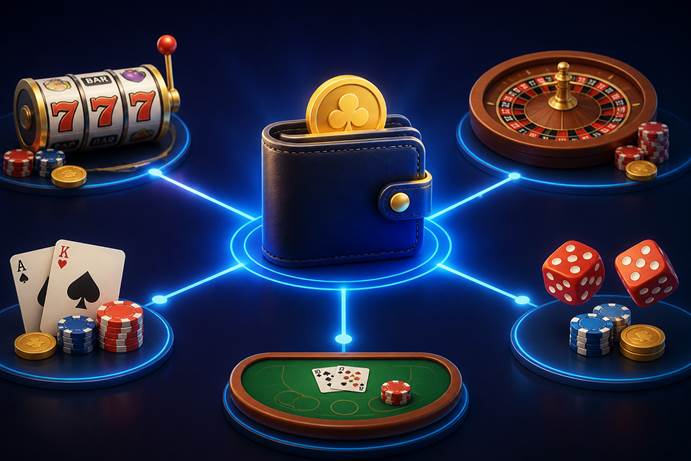
    How Casino Wallet Systems Connect Multiple GamesModern casino environments thrive on the seamless movement of credits across dozens of different activities, a capability made possible by sophisticated wallet infrastructure that maintains real-time balance synchronization. A related resource such as https://simo-trial.de/ can help frame the discussion. The casino wallet system serves as the invisible backbone that allows a player to move from a blackjack table to a slot machine without missing a beat, ensuring that funds are accurately tracked and available regardless of which game they choose to play next. This connectivity is particularly crucial in today’s integrated casino platforms, where players expect the same level of convenience and reliability whether they’re playing in a physical establishment or through a digital interface . The casino wallet system essentially transforms what could be dozens of isolated gaming experiences into a single, cohesive entertainment ecosystem.

    Balancing System and Casino Experience

    At its core, the casino wallet system functions as a centralized ledger that records every transaction across multiple games in real-time. When a player places a bet at a roulette table, the system immediately updates their balance, allowing them to immediately transition to a poker game or electronic terminal without any delay or reconciliation process. This level of integration requires robust backend architecture that can handle thousands of simultaneous transactions while maintaining absolute accuracy. The casino wallet system must also account for different game mechanics, varying bet sizes, and different payout structures while ensuring that the player’s available funds remain consistent across all activities.

    The implementation of an effective casino wallet system presents significant technical challenges that require careful planning and execution. Developers must create interfaces that can communicate with dozens of different game providers while maintaining security and performance standards. The casino wallet system must also handle edge cases like bonus credits, promotional offers, and different currency types without compromising the user experience. As casinos expand their offerings to include more diverse gaming options, the wallet system becomes increasingly complex, requiring constant updates and optimizations to keep pace with new game releases and changing player expectations.
    Area

    What to know

    Context

    At its core, the casino wallet system functions as a centralized ledger that records every transaction across multiple games in real-time.

    Consideration

    The implementation of an effective casino wallet system presents significant technical challenges that require careful planning and execution.

    Practical takeaway

    Player experience remains the ultimate measure of a successful casino wallet system implementation.

    Player Experience: Key Considerations

    Player experience remains the ultimate measure of a successful casino wallet system implementation. When the connection between multiple games functions smoothly, players can focus on enjoying their entertainment rather than worrying about technical issues or balance discrepancies. A well-designed casino wallet system creates a sense of freedom and flexibility, allowing players to explore different games without the friction of separate accounts or payment processes. This seamless experience is particularly important in modern casinos where players often move between physical and digital gaming environments, expecting the same level of convenience regardless of where they choose to play.

    • When a player places a bet at a roulette table, the system immediately updates their balance, allowing them to immediately transition to a poker game or electronic terminal without any

    •         This level of integration requires robust backend architecture that can handle thousands of simultaneous transactions while maintaining absolute accuracy

    •         The casino wallet system must also account for different game mechanics, varying bet sizes, and different payout structures while ensuring that the player’s available funds remain

    •         The implementation of an effective casino wallet system presents significant technical challenges that require careful planning and execution

    •         The casino wallet system must also handle edge cases like bonus credits, promotional offers, and different currency types without compromising the user experience

    •         When the connection between multiple games functions smoothly, players can focus on enjoying their entertainment rather than worrying about technical issues or balance discrepancies

    •         A well-designed casino wallet system creates a sense of freedom and flexibility, allowing players to explore different games without the friction of separate accounts or payment processes

    Wallet, System, and the User Experience

    Looking ahead, the casino wallet system will continue to evolve as technology advances and player expectations change. Future developments may include more sophisticated analytics that track player behavior across multiple games, enhanced security features that protect against emerging threats, and greater integration with emerging payment technologies. The fundamental principle of connecting multiple games through a unified wallet system, however, will remain constant. As casinos continue to expand their offerings and diversify their gaming portfolios, the importance of a reliable, efficient wallet system will only grow, serving as the invisible thread that weaves together all the different elements of the modern casino experience into a cohesive, enjoyable whole.

  • How Crypto Casinos Verify Ownership of a Wallet

    Users often assume that simply depositing funds into a platform serves as sufficient proof of identity for a crypto casino, but the technical reality is more rigorous than a simple balance transfer. For a related account reference, 1 win giriş can add useful context. When a site requires you to verify your status, it is not merely checking for available capital; it is executing a cryptographic handshake to ensure that you are the legitimate operator of your private keys. You can learn more about these authentication protocols by visiting this which details how platforms manage user connections. This verification process remains distinct from traditional identity checks because it never requires the disclosure of sensitive credentials. Instead, the architecture focuses on mathematical proof to establish a link between the player and the blockchain address provided for betting activities.

    • Many participants believe that ownership is confirmed by the casino seeing a deposit arrive from an address they control
    • This involves the user signing a unique, platform-generated string of characters using their wallet software, which serves as an irrefutable mathematical confirmation that the wallet is
    • The process relies on asymmetric encryption where the casino provides a random challenge message
    • The user signs this message locally within their own wallet application or hardware device
    • Only the resulting signature—a piece of data that proves the private key was used—is transmitted back to the casino
    • If a user connects via an exchange-hosted address rather than a self-custodied wallet, the platform may trigger a secondary verification step to ensure the user truly has authorization to
    • This ensures that the crypto casino is not facilitating money laundering or account takeover schemes
    • By forcing a direct signature from a private wallet, the platform maintains a clean trail of activity while respecting the pseudonymity that many players prioritize

    Many participants believe that ownership is confirmed by the casino seeing a deposit arrive from an address they control. In practice, receiving a transaction does not prove that the sender has ongoing control over that address, nor does it confirm that they have the ability to sign future messages. A casino that relies only on monitoring inbound deposits is actually exposed to significant risks, as anyone can send assets from a shared or custodial source. To mitigate these vulnerabilities, reputable operators shift the burden to the user by requesting a signature. This involves the user signing a unique, platform-generated string of characters using their wallet software, which serves as an irrefutable mathematical confirmation that the wallet is held by the individual accessing the account.

    Account Access and Use: Part 2

    A common point of confusion involves the role of private keys during this verification phase. Some users fear that providing proof of ownership requires them to reveal their seed phrase or secret key to the casino server. This is a misunderstanding of how public-key cryptography functions. The process relies on asymmetric encryption where the casino provides a random challenge message. The user signs this message locally within their own wallet application or hardware device. Only the resulting signature—a piece of data that proves the private key was used—is transmitted back to the casino. The original secret remains securely isolated on the user’s device, and the casino never gains access to the actual keying material required to move funds from the wallet.

    Account Access and Use: Part 3

    Technical verification also serves as a safeguard against malicious activity originating from third-party services. If a user connects via an exchange-hosted address rather than a self-custodied wallet, the platform may trigger a secondary verification step to ensure the user truly has authorization to interact with the external environment. This ensures that the crypto casino is not facilitating money laundering or account takeover schemes. By forcing a direct signature from a private wallet, the platform maintains a clean trail of activity while respecting the pseudonymity that many players prioritize. This mechanism effectively creates a bridge between the transparent nature of public blockchains and the private requirements of an account-based gaming environment.

    Account Access and Use

    As the sector continues to develop, these verification flows are becoming increasingly standardized to protect both the operator and the player. Modern wallet interfaces are now designed to handle these signing requests natively, making it easier for users to prove control without needing deep technical knowledge of how the underlying code functions. This evolution helps prevent fraud while allowing platforms to maintain compliance standards without reverting to legacy identity verification methods. The result is a system where the casino can confidently confirm the authenticity of each user while the player retains absolute autonomy over their own digital assets, ensuring that every bet is linked directly to a verifiable owner.

  • How Cryptocurrency Influenced Online Casinos

    The intersection of blockchain innovation and internet betting has triggered widespread changes in transactional mechanics, and observers can review current trends by visiting this for additional insights. For a related account reference, meilleur casino live en ligne can add useful context. For decades, online casinos relied strictly on traditional merchant accounts, credit card processors, and bank wire transfers. These legacy systems introduced mandatory delays, rigid geographic boundaries, and overhead fees that reduced the efficiency of moving funds between accounts. When cryptocurrency entered the market, it offered a peer-to-peer alternative that bypassed standard intermediaries entirely.

    Costs and Practical Trade-offs

    This operational shift changed the fundamental mechanics of player banking. Deposits that once required multi-day clearing periods began settling in minutes or even seconds, depending on network congestion and block confirmation speeds. Similarly, withdrawals no longer depended on manual administrative approvals from banking departments. Players gained the ability to pull their balances back to personal wallets without enduring the standard bureaucracy associated with corporate finance divisions.

    Beyond transactional speed, cryptocurrency introduced alternative cryptographic mechanisms for verifying the fairness of betting outcomes. Traditional online casinos required complete trust in centralized operators who managed closed databases and proprietary random number generators. The introduction of verifiable ledger technology allowed developers to create transparent protocols where mathematical fairness could be independently checked by the end user. This technical shift diminished blind trust, replacing it with cryptographic proof that results had not been altered after bets were placed.

    Account Access and Use: Part 2

    Operational structures within online casinos also evolved to accommodate these alternative payment methods. Many platforms transitioned into multi-currency environments, supporting both sovereign fiat money and native token assets side by side. This flexibility forced administrative teams to adapt their accounting practices, risk management procedures, and compliance frameworks to handle fluctuating coin valuations and distinct blockchain network requirements.

    • Deposits that once required multi-day clearing periods began settling in minutes or even seconds, depending on network congestion and block confirmation speeds
    • Similarly, withdrawals no longer depended on manual administrative approvals from banking departments
    • The pseudonymous nature of decentralized ledgers complicates standard identity verification routines, forcing operators to balance privacy expectations with strict anti-money laundering
    • Regulators worldwide continue to scrutinize how cryptocurrency transactions interact with existing consumer protection laws designed for fiat banking environments

    Despite the technical advantages, this financial integration brought distinct challenges regarding consumer protection and regulatory oversight. The pseudonymous nature of decentralized ledgers complicates standard identity verification routines, forcing operators to balance privacy expectations with strict anti-money laundering mandates. Regulators worldwide continue to scrutinize how cryptocurrency transactions interact with existing consumer protection laws designed for fiat banking environments.

    Area What to know
    Context This operational shift changed the fundamental mechanics of player banking.
    Consideration Beyond transactional speed, cryptocurrency introduced alternative cryptographic mechanisms for verifying the fairness of betting outcomes.
    Practical takeaway Operational structures within online casinos also evolved to accommodate these alternative payment methods.

    Account Access and Use

    Looking ahead, the long-term influence of cryptocurrency on online casinos points toward further technological integration rather than a return to traditional banking dominance. As payment layers mature and user interfaces become more intuitive, decentralized assets will likely remain a foundational pillar of web-based entertainment. The lasting legacy of this technological convergence lies in its ability to permanently reset user expectations regarding settlement speed, operational transparency, and financial autonomy.

  • How Gamble Features Work in Online Casino Slots

    Online casino slots have evolved beyond simple reels and paylines. One of the most recognizable add‑ons is the gamble feature, an optional turn that appears after a winning spin. When the screen flashes a card or coin icon, the player is offered a chance to double or even quadruple the prize by risking the current amount. The feature is not mandatory; it can be declined, letting the player keep the original win. The decision point is brief, often a single click, and it introduces a layer of choice that sits beside the random outcome of the initial spin.

    At its core, the gamble feature is still governed by the same random number generator that determines the reel results. The system selects a random outcome for the gamble round, which can be a card flip, a coin toss, or a dice roll, depending on the game’s design. The payout structure is predefined: a single match might double the stake, a double match could triple it, and a perfect match might award a larger multiplier. Because the outcome is random, the probability of success is fixed, and the expected return for the player can be calculated from the odds presented by the game.

    Randomness and return to player (RTP) are intertwined. The base slot’s RTP is set by the software provider and audited by third parties; it represents the long‑term percentage of all wagers that will be paid back to players. Introducing a gamble feature alters the immediate risk profile but does not change the underlying RTP of the base game. In practice, the expected value of a gamble round is usually lower than the amount wagered, meaning the house edge remains in place. Players who repeatedly gamble may see a short‑term boost, but over many rounds the statistical advantage stays with the operator.

    Regulatory bodies and certification labs play a crucial role in ensuring that gamble features operate fairly. For additional context, mostbet aviator hack can be considered alongside this overview. Independent testing firms run thousands of simulations to verify that the probabilities match the advertised odds. They also check that the software cannot be manipulated and that the RNG is properly seeded. If a game passes these audits, it often receives a seal of approval from the jurisdiction that issued the casino’s license. For players seeking assurance, a quick search can reveal whether a particular title has been verified, and many operators display the certification badge on their site, sometimes linked to a public record. For more details on how these checks work, you can visit .

    Consumer protection measures extend beyond audits. Operators are required to provide clear disclosures about the gamble feature’s odds and potential loss. Some jurisdictions mandate that the gamble option be disabled for players who have reached a self‑exclusion limit or who are flagged for problem gambling. Additionally, the feature is often capped at a certain percentage of the initial win to prevent runaway losses. Transparency in the payout table, which is usually displayed in the game’s information panel, helps players assess the risk before they commit.

    Evaluating a gamble feature boils down to understanding the trade‑off between risk and reward. While the allure of a doubled payout can be tempting, the mathematics reveal that the house edge persists. Players who enjoy the psychological thrill of a gamble round can do so responsibly, keeping in mind that the feature is optional and that the long‑term expectation favors the casino. A balanced view acknowledges both the excitement it adds to gameplay and the statistical reality that it remains a bet with a negative expected value.

  • L’Impact des Casinos sur l’Économie de Macao

    Macao est souvent désignée comme la pôle globale des divertissements d’argent , dépassant Las Vegas en matière de recettes. En 2019 , les jeux de Macao ont généré approximativement 37,5 milliards de monnaie US , faisant venir des centaines de milliers de touristes tous année. Cette ville , ancienne colonie portugaise , est devenue un centre de loisir et de jeux , avec des sites reconnus tels le Venetian Macao et le City of Dreams.

    Un acteur clé dans cette secteur est Lawrence Ho , le PDG de Melco Resorts & Loisirs , qui a exercé un fonction fondamental dans le croissance de l’infrastructure de jeu à Macao. Vous avez la possibilité de suivre ses actions sur son profil Twitter. En 2020 , bien que la crise de COVID-19 , Macao a débuté à se redresser grâce à des actions de sécurité strictes et à des actions de promotion orientées pour attirer les touristes.

    Pour les visiteurs , il est essentiel de appréhender les directives des jeux et les demandes des casinos. Les participants doivent être conscients des restrictions de pari et des codes d’habillement. Pour améliorer votre vivre , considérez de vous inscrire à des initiatives de constance qui offrent des bénéfices particuliers. Pour davantage d’éléments sur les casinos à Macao , consultez cet exposé sur la récupération des casinos à Macao.

    En synthèse , les casinos de Macao ont un fonction déterminant dans l’économie locale , générant des travaux et stimulant le déplacement. En comprenant leur influence , les visiteurs peuvent mieux estimer l’aventure exceptionnelle que cette localité a à donner. Découvrez ces possibilités sur casino roulette en ligne.

  • How Unlimited Multipliers Work in Casino Slots

    When you sit down at a casino, the shifting landscape of slot design often draws focus toward features that promise exponential growth. For additional perspective on these metrics, pin up casino güncel giriş may be useful. The mechanism known as unlimited multipliers functions by applying an increasing coefficient to your winnings without a predetermined ceiling, a concept you can explore through this for technical documentation. In a standard casino setting, this usually triggers during a bonus round where every successful cascade or reaction causes the multiplier to climb. While the prospect of an infinite climb generates significant excitement, the mathematical reality is that these sequences are constrained by the volatility of the software. A casino environment relies on these mechanics to sustain engagement, but the probability of reaching high numerical values remains statistically remote.

    Security and Risk

    Understanding how these multipliers work requires looking at the cascading reel mechanic common in many modern titles found on a casino floor. Each time you land a winning combination, the symbols involved vanish and are replaced by new ones falling from the top of the grid. If these new symbols create another win, the multiplier increments by a set value, such as one or two. This cycle continues indefinitely until no new winning combinations appear on the screen. Because the casino requires a balance between risk and reward, the base payout for these symbols is often lower than in machines that lack such scaling features.

    For the average player in a casino, the visual feedback of an increasing number provides an immediate dopamine response. You might see a small win start the chain, only for it to grow as consecutive cascades occur. However, the experience can be deceptive. A casino machine might display a multiplier that climbs rapidly, but if the underlying symbols do not align to create substantial payouts, the final result remains modest. The multiplier is simply a multiplier of the spin value, not a guaranteed pathway to a massive return. Operators of a physical casino know that players are attracted to the narrative of the ‘big climb,’ even if the frequency of those streaks is controlled by the underlying random number generator.

    Metrics and Performance

    Many players mistake the unlimited nature of these multipliers for a lack of design limits. In practice, every casino title operates within a strict Return to Player percentage that dictates long-term performance. Even if a multiplier could theoretically reach infinity, the software constraints prevent this by terminating the cascade sequence through sheer probability. When you enter a casino, it is helpful to recognize that the game engine is not designed to pay out progressively higher amounts every time; it is designed to simulate the potential for such events while keeping the game mathematically viable for the casino.

    Area What to know
    Context Understanding how these multipliers work requires looking at the cascading reel mechanic common in many modern titles found on a casino floor.
    Consideration For the average player in a casino, the visual feedback of an increasing number provides an immediate dopamine response.
    Practical takeaway Many players mistake the unlimited nature of these multipliers for a lack of design limits.

    Managing expectations is essential when engaging with these volatile mechanics. Because the potential for a high multiplier is theoretically unlimited, developers often calibrate the game to have long periods of stagnant play followed by bursts of activity. If you are playing in a digital or land-based casino, you will notice that the most significant payouts often occur only after a long chain of successes. This creates a high-variance experience where your balance can fluctuate rapidly. Relying on the promise of an unlimited multiplier is a high-risk strategy that rarely accounts for the reality of long-term losses associated with such aggressive slot mathematics.

    • Understanding how these multipliers work requires looking at the cascading reel mechanic common in many modern titles found on a casino floor
    • The multiplier is simply a multiplier of the spin value, not a guaranteed pathway to a massive return
    • Operators of a physical casino know that players are attracted to the narrative of the ‘big climb,’ even if the frequency of those streaks is controlled by the underlying random number

    Tools and Practical Use

    The final consideration involves how these features influence your overall session duration. Because these mechanics are designed to consume or produce coins in large bursts, your bankroll might vanish much faster than on traditional machines. A session at a casino that features these progressive elements often results in a different type of experience than playing standard fixed-payline slots. While the allure of watching a number grow alongside your bankroll is undeniable, keep in mind that the casino has engineered these tools specifically to increase the intensity of play, which frequently shortens the time you spend on the machine.